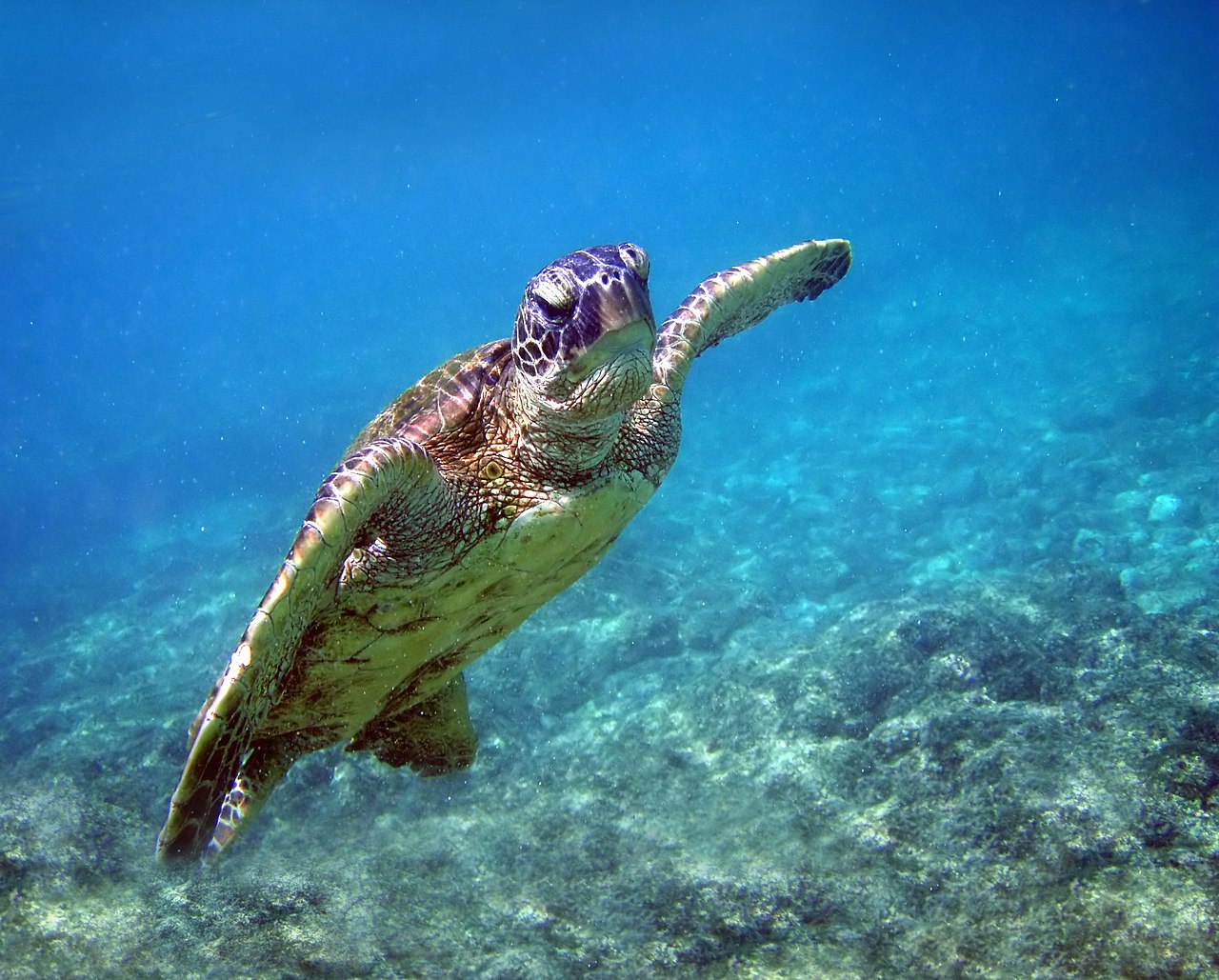
Sea Turtles: Our Endangered Ocean Friends

History about Sea Turtles
Sea turtles are among the oldest creatures on earth and have remained essentially unchanged for 110 million years. However, they face an uncertain future. Sea turtles are threatened in many ways, such as encroachment of coastal development on their nesting beaches, encounters with pollutants and marine debris, accidental drownings in fishing gear, and international trade in turtle meat and products.
In most sea turtles,the top shell, or carapace, is composed of many bones covered with horny scales or "scutes." Turtles are toothless but have powerful jaws to crush, bite, and tear their food.

Life cycle on Sea Turtles
- The life cycle of turtles begins with female sea turtles coming on to the beach at night to lay a nest of 100-200 eggs.
- Nests hatch in 40 to 60 days, depending on the species.
- Baby turtles, or hatchlings, are completely independent at birth and never see their mothers.
- After a few years, immature turtles will settle close to shore where it may take them more than 30 years to reach adulthood.
- Female turtles swim back to the beach on which they were born to lay eggs every 2 to 3 years.
- Sea turtles have a very low natural survival rate: only 1 in 1,000 turtles will make it to adulthood.
- In a single nesting season, females lay between two and six clutches of eggs, each containing 65 to 180 eggs.
7 Different Types Of Endangered Sea Turtles
-
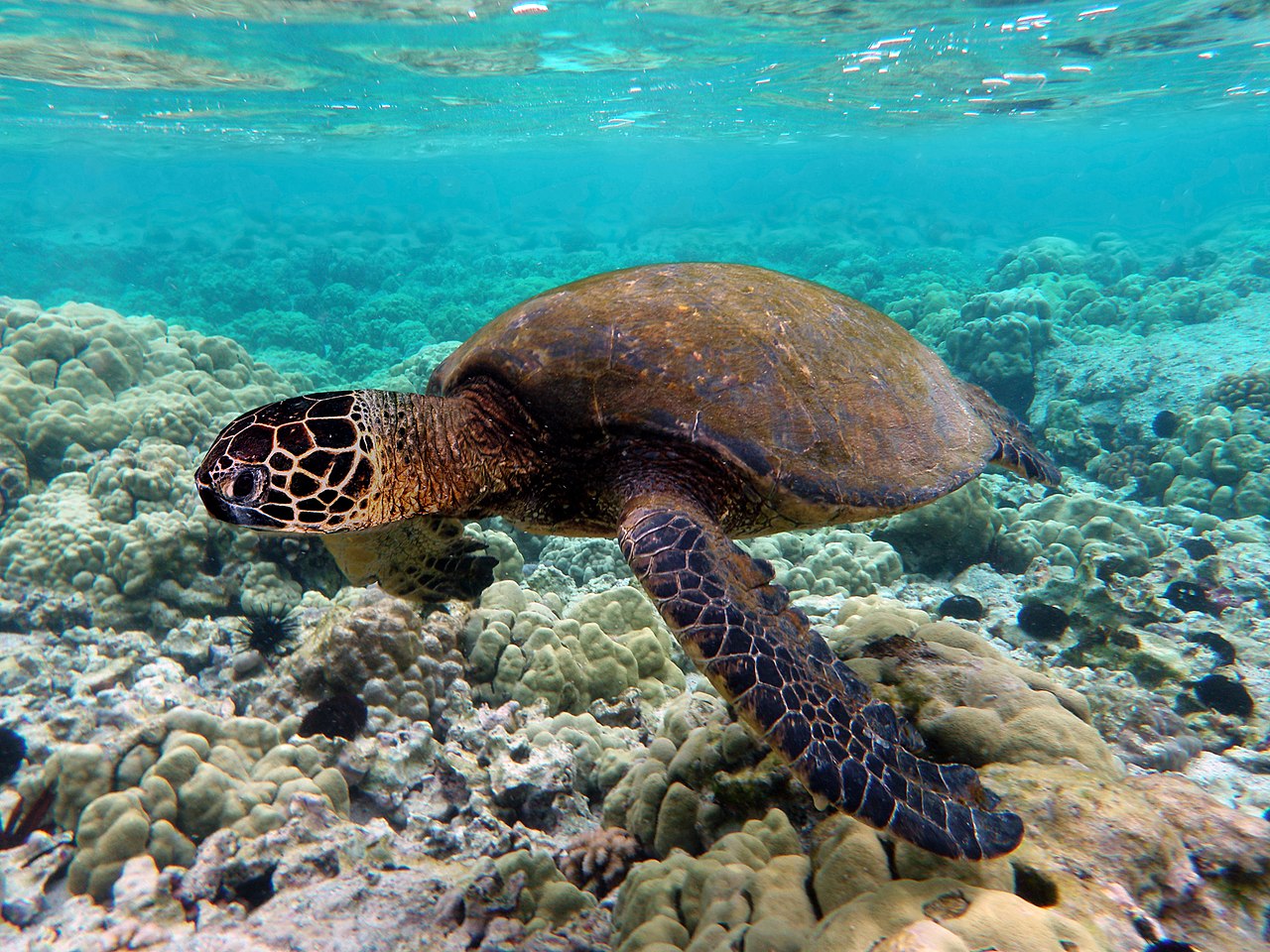
Green Sea Turtle
- These turtles weigh about 400 pounds and are 5.5 feet in length. They mostly feed on sea grass and algae. In fact, the pigment from their green diet colors their fat, which gives them their label. Kemp's Ridley Sea Turtle
- Kemp’s Ridley Sea Turtle, This turtle is one of the smallest turtles in the world. They weigh about 100 pounds and are 2.5 to 3 feet in length. Their diet includes mollusks, jellyfish, crabs and small fish. A mature age is 10 to 20 years old and they can live up to 50 years. Hawksbill Sea Turtle
- Hawksbill Turtle, The hawksbill turtle is distinguished by its heart-shaped shell. They primarily consume sponges along with jellyfish, mollusks, crustaceans and small fish. Leatherback Sea Turtle
- Leatherback Turtle, The leatherback is the “big boy” and can weigh up to 2,000 pounds and grows to seven and one-half feet in length. Travel hundreds of miles in search of energy from jellyfish. Unfortunately, jellyfish are rough on their digestion, which causes an intestinal block. When food is not available, they will eat plastic bags, as it resembles a jellyfish. Loggerhead Sea Turtle
- Loggerhead Turtle, The loggerhead is most notable for its large head. Large populations are found in the Bahamas and Mexico. These turtles are not ready to mate until they reach 33 years of age. Olive Ridley Sea Turtle
- Olive Ridley Sea Turtle, These gray and green heart-shaped turtles weigh up to 100 pounds and grow to less than 3 feet in length. Olive Ridley’s consume crustaceans and jellyfish, but will eat algae if no other options are available. Flatback Sea Turtle
- Flatback Sea Turtle, The Flatbacks weigh up to 200 pounds and can grow up to 39 inches in length. They are “loners” and can live up to 100 years in age.